Restoran Bawal 2 Kepala Batas Pulau Pinang

Restoren ni terletak di Kepala Batas,tepi jalan menghala ke Prai,ikut jalan kampung.Kat area Paya Keladi kot..rasanyalah.Dekat area bangunan kedai baru,tak silap kat area jalan kampung permatang yang ada kubur depan trafic light tu.

Satu set menu berharga RM20 hingga RM80 camtu.Untuk 3 org,4org,6 org,8 org dan 10 org.Byk pilihan set menu selain ala carte menu.
Kami tiga family ambil 2 set menu yang berharga RM57/set.Menu dia ada:
-Kari Bawal 2 mangkuk
-Asam pedas Ikan pari 2 mangkuk
-1 ekor bawal goreng
-2 pinggan telur dadar
-Ulam 1 pinggan dan sambal belacan
-1 ekor sambal ikan bawal
-2 jug air teh O' ais
-8 pinggan nasi putih
-Air kosong free flow

Tah apa lagi lupa..sebab pi time pas raya.Sedap makan kat sini,dah le murah gila aku rasa.

antara lauk yang ada dalam set bawal ni
kari bawal


ulam

bawal goreng


Overall,restoran ini berbaloi dikunjungi.Terutama  bila bawa 2,3,4 atau 10 family.Staf dan servis pun ok,siap boleh tapau lagi bila lauk tak larat nak habiskan.Kami tapau asam pedas ikan pari masa tu sebab dah larat nak makan.

Malaysian drivers-are we really that horrible?


A guide for expatriate drivers in Malaysia
by David Astley a British/Ozzie guy now living in KL
Since arriving in Malaysia in 1997, I have tried on many occasions to
buy a copy of the Malaysian road rules, but have come to the
conclusion that no such publication exists (or if it does, it has been
out of print for years). Therefore after carefully observing the
driving habits of Malaysian drivers, I believe I have at last worked
out the rules of the road in Malaysia.
For the benefit of other expatriates living in Malaysia, and the 50%
of local drivers who acquired their driving licences without taking a
driving test, I am pleased to share my knowledge below:
Q: What is the most important rule of the road in Malaysia?
A: The most important rule is that you must arrive at your destination
ahead of the car in front of you. This is the sacrosanct rule of
driving in Malaysia. All other rules are subservient to this rule.
Q: What side of the road should you drive on in Malaysia?
A: 99.7% of cars drive on the left hand side, 0.2% on the right hand
side, and 0.1% drive in reverse (be on the look out for drivers
reversing at high speed in the left hand lane of freeways, having just
missed their exit). Therefore on the basis of ‘majority rules’, it is
recommended that you drive on the left. However, be aware that only
90% of motorcyclists travel on the left hand side – the other 10% ride
in the opposite direction or on the sidewalk. Fortunately,
motorcyclists traveling in reverse are rarely seen.
Q: What are the white lines on the roads?
A: These are known as lane markers and were used by the British in the
colonial days to help them drive straight. Today their purpose is
mainly decorative, although a double white line is used to indicate a
place that is popular to overtake.
Q: When can I use the emergency lane?
A: You can use the emergency lane for any emergency, e.g. you are late
for work, you left the toaster plugged in at home, you are bursting to
go to the toilet, you have a toothache or you have just dropped your
Starbucks coffee in your lap. As it is an emergency, you may drive at
twice the speed of the other cars on the road.
Q: Do traffic lights have the same meaning as in other countries?
A: Not quite. Green is the same that means “Go”, but amber and red are
different. Amber means “Go like hell” and red means “Stop if there is
traffic coming in the other direction or if there is a policeman on
the corner”. Otherwise red means the same as green. Note that for
buses, red lights do not take effect until five seconds after the
light has changed.
Q: What does the sign “Jalan Sehala” mean?
A: This means “One Way Street” and indicates a street where the
traffic is required to travel in one direction. The arrow on the sign
indicates the preferred direction of the traffic flow, but is not
compulsory. If the traffic is not flowing in the direction in which
you wish to travel, then reversing in that direction is the best
option.
Q: What does the sign “Berhenti” mean?
A: This means “Stop”, and is used to indicate a junction where there
is a possibility that you may have to stop if you cannot fool the cars
on the road that you are entering into thinking that you are not going
to stop.
Q: What does the sign “Beri Laluan” mean?
A: This means “Give Way”, and is used to indicate a junction where the
cars on the road that you are entering will give way to you provided
you avoid all eye contact with them and you can fool them into
thinking that you have not seen them.
Q: What does the sign “Dilarang Masuk” mean?
A: This means “No Entry”. However, when used on exit ramps in
multi-storey car parks, it has an alternative meaning which is: “Short
cut to the next level up”.
Q: What does the sign “Pandu Cermat” mean?
A: This means “Drive Smartly”, and is placed along highways to remind
drivers that they should never leave more than one car length between
them and the car in front, irrespective of what speed they are
driving. This is to ensure that other cars cannot cut in front of you
and thus prevent you from achieving the primary objective of driving
in Malaysia, and that is to arrive ahead of the car in front of you.
If you can see the rear number plate of the car in front of you, then
you are not driving close enough.
Q: What is the speed limit in Malaysia?
A: The concept of a speed limit is unknown in Malaysia.
Q: So what are the round signs on the highways with the numbers, 60,
80 and 110?
A: This is the amount of the ‘on-the-spot’ fine (in ringgits – the
local currency) that you have to pay to the police if you are stopped
on that stretch of the highway. Note that for expatriates or locals
driving Mercedes or BMWs, the on-the-spot fine is double the amount
shown on the sign.
Q: Where do you pay the ‘on-the-spot’ fine?
A: As the name suggests, you pay it ‘on-the-spot’ to the policeman who
has stopped you. You will be asked to place your driving licence on
the policeman’s notebook that he will hand to you through the window
of your car. You will note that there is a spot on the cover of the
notebook. Neatly fold the amount of your fine into four, place the
fine on the spot, and then cover it with your driving licence so that
it cannot be seen. Pass it carefully to the policeman. Then, with a
David Copperfield movement of his hands, he will make your money
disappear. It is not necessary to applaud.
Q: But isn’t this a bribe?
A: Oh pleeease, go and wash your mouth out. What do you want? A
traffic ticket? Yes, you can request one of those instead, but it will
cost you twice the price, forms to fill out, cheques to write,
envelopes to mail, and then three months later when you are advised
that your fine was never received, more forms to fill out, a trip to
the police station, a trip to the bank, a trip back to the police
station, and maybe then you will wish you had paid ‘on-the-spot’.
Q: But what if I haven’t broken any road rules?
A: It is not common practice in Malaysia to stop motorists for
breaking road rules (because nobody is really sure what they are). The
most common reasons for being stopped are:
(a) the policeman is hungry and would like you to buy him lunch;
(b) the policeman has run out of petrol and needs some money to get
back to the station;
(c) you look like a generous person who would like to make a donation
to the police welfare fund; or
(d) you are driving an expensive car which means you can afford to
make a donation to the police welfare fund.
Q: Does my car require a roadworthy certificate before I can drive it
in Malaysia?

A: No, roadworthy certificates are not required in Malaysia. However
there are certain other statutory requirements that must be fulfilled
before your car can be driven in Malaysia.
Firstly, you must ensure that your windscreen is at least 50% obscured
with English football club decals, golf club membership stickers or
condo parking permits.
Secondly, you must place a tissue box (preferably in a white lace
cover) on the back shelf of your car under the rear window.
Thirdly, you must hang as many CDs or plastic ornaments from your rear
vision mirror as it will support. Finally, you must place a Garfield
doll with suction caps on one of your windows. Your car will then be
ready to drive on Malaysian roads.
Q: What does a single yellow line along the edge of a road mean?
A: This means parking is permitted.
Q: What does a double yellow line along the edge of a road mean?
A: This means double parking is permitted.
Q: What does a yellow box with a diagonal grid of yellow lines painted
on the road at a junction mean?

A: Contrary to the understanding of some local drivers, this does not
mean that diagonal parking is permitted. It indicates a junction that
is grid-locked at peak hours.
Q: Can I use my mobile phone whilst driving in Malaysia?
A: No problem at all, but it should be noted that if you wish to use
the rear-vision mirror to put on your lipstick (women only please) or
trim your eyebrows at the same time as you are using a mobile phone in
the other hand, you should ensure that you keep an elbow free to steer
the car. Alternatively, you may place a toddler on your lap and have
the child steer the car whilst you are carrying out these other
essential driving tasks.
Q: Is it necessary to use indicator lights in Malaysia?
A: These blinking orange lights are commonly used by newly arrived
expatriate drivers to indicate they are about to change lanes. This
provides a useful signal to local drivers to close up any gaps to
prevent the expatriate driver from changing lanes. Therefore it is
recommended that expatriate drivers adopt the local practice of
avoiding all use of indicator lights. However, it is sometimes useful
to turn on your left hand indicator if you want to merge right,
because this confuses other drivers enabling you to take advantage of
an unprotected gap in the traffic.
Q: Why do some local drivers turn on their left hand indicator and
then turn right, or turn on their right hand indicator and then turn
left?

A: This is one of the unsolved mysteries of driving in Malaysia.
Q. What is the use of the hazard warning lights?
A. Contrary to all international protocol, this four way flashing
light is = switched on when the Police are escorting VIPs on the road
to warn lesser mortals to move out of the way and not hinder the flow
of the motorcade. Taking a cue from the Police, motorists use this at
the slightest excuse when it rains to tell other motorist to get out
of the way as using their hazard light anoints them with powers that
part the traffic, somewhat akin to Moses parting the Red Sea.

Apakah dinnerware dan jenis-jenis yang ada

Apakah dinnerware?
Tableware is the dishes or dishware (ceramic), dinnerware (ceramics and other materials) used for setting a table, serving food and for dining.[1] Tableware can be meant to include cutlery and glassware. The nature, variety, and number of objects varies from culture to culture, religions, and cuisines.
Dishes are usually made of ceramic materials such as earthenware, stoneware, bone china or porcelain, however can be made of other materials such as wood, pewter, silver, gold, glass, acrylic and plastic. Dishes are purchased either by the piece or by set which include either four, eight, or twelve place settings. Individual pieces, such as those needed as replacement pieces for broken dishes, can be purchased from "open stock" inventory at shops, or from antique dealers if the pattern is no longer in production.
*wikipedia*

Jenis-Jenis material dinnerware:
1.Earthenware- seramik dari tanah liat dibakar dalam api perlahan
Although body formulations vary between countries and even between individual makers, a generic composition is 25% ball clay, 28% kaolin, 32% quartz and 15% feldspar. Earthenware is one of the oldest materials used in pottery. After firing the body is porous and opaque, and depending on the raw materials used will be colored from white to buff to red.


2.Stoneware-seramik tanah liat dan dikilatkan,bewarna keperangan akibat bendasing dalam tanah liat,dibakar dalam api bersuhu tinggi
Stoneware is a vitreous or semi-vitreous ceramic ware made primarily from non-refractory fire clay.[1]
"Stoneware, which, though dense, impermeable and hard enough to resist scratching by a steel point, differs from porcelain because it is more opaque, and normally only partially vitrified. It may be vitreous or semi-vitreous. It is usually coloured grey or brownish because of impurities in the clay used for its manufacture, and is normally glazed."

3.Bone china-diperbuat menggunakan abu tulang dan batuan  mineral

Bone china is a type of soft-paste porcelain that is composed of bone ash, feldspathic material and kaolin. It has been defined as ware with a translucent body containing a minimum of 30% of phosphate derived from animal bone and calculated calcium phosphate.[1] Developed by English potter Josiah Spode, bone china is known for its high levels of whiteness and translucency,[2] and very high mechanical strength and chip resistance.
Bone china is considered as the finest type of porcelain. Calcined bone ash makes up 50% of fine bone china's properties. Without this ash component, the item is not considered as 'authentic' fine bone china. It has its own inherent qualities which are not found in most porcelain, most significant are:

1. It has a silky white color compared to the common grayish color of porcelain.
2. It is much more translucent than porcelain and tends to glow when lighted up from the inside
3. It exudes a special aura when kept in a specially lighted space.
4. It can be made thinner and finer-looking without sacrificing durability
5. By history, it has a reputation as expensive and is associated with wealth and royalty

The production of handmade fine bone china requires a long and complex process by a skilled team of artisans following only the highest standards of quality. This contributes to its high demand and luxury status in the market. CSM adheres to the same formula perfected by Josiah Spode, a renowned English potter in the late 18th century.


4.Porcelain-produk dari tanah liat dan kaolin(batu mineral)

Porcelain is a ceramic material made by heating raw materials, generally including clay in the form of kaolin, in a kiln to temperatures between 1,200 °C (2,192 °F) and 1,400 °C (2,552 °F). The toughness, strength, and translucence of porcelain arise mainly from the formation of glass and the mineral mullite within the fired body at these high temperatures.
Porcelain is a type of pottery. It was named by the famous explorer Marco Polo when he found some on his visit to China. The name porcelain comes from an Italian word that means “cowry shell.” That’s because Marco Polo thought that the pottery looked like the texture of a seashell!
Porcelain is made from ground up pieces of rock or minerals. They are grinded until they become a powder and they are mixed with a form of clay. The mixture is then heated to over 1400 degrees Fahrenheit, which is hotter than volcanic lava! That’s way too hot to touch!
When it all cools, it becomes hard and shiny. Most of the time, if you shine a light behind a piece of porcelain, you can see a faint, blurry trace of the light through the pottery. Most porcelain is very fragile, meaning it can break easily, so you always want to ask permission before you pick up a piece of it.


5.Opal Glass-atau milk glass,berasal dari silika

Milk glass is an opaque or translucent,milky white or colored glass, blown or pressed into a wide variety of shapes. First made in Venice in the 16th century, colors include blue, pink, yellow, brown, black, and the white that led to its popular name.
‘Opal adalah bentuk amorfis dari silika yang berkaitan dengan kuarsa (bentuk mineraloid-nya, bukan mineral).’


What is Stoneware?

Take a look in your kitchen. What do you see? Mugs, plates, casserole dishes, platters, bowls etc. Many of these things may be made of stoneware. These pieces will either be made in earthenware (a low-fired clay) or in stoneware (a high-fired clay). Earthenware is a white and porous clay that is fired at a low temperature (about 1915 degrees Fahrenheit). (Earthenware is usually called "ceramics" or "ceramic ware".) It is then decorated, glazed with a clear coat and fired. Stoneware is a stronger clay that is fired to a high temperature (about 2185 degrees Fahrenheit) and becomes vitreous. It can then be left undecorated or decorated with colored glazes with an optional clear glaze coating and re-fired.

Stoneware is a clay that when fired to maturity becomes a sturdy, chip resistant material suitable for using in cooking, baking, storing liquids, as serving dishes and to use in the garden. These pieces are meant to be used due to their durability.

How can you tell the difference between stoneware and earthenware?
Pick up a piece in your kitchen (a plate, mug or bowl). Can you tell if it's stoneware, earthenware or porcelain?
First, let's find out if it's porcelain. Porcelain is translucent. (Stoneware and earthenware is not.) Put the piece up against a light. If you can see light through the piece, it's porcelain. If it's completely opaque, it's not porcelain.

Second, let's figure out if it's earthenware or stoneware:

1. Pick up your piece and feel the weight. If it feels pretty dense for its size, that's a good sign that it's stoneware.
2. Look at the bottom. Is it uncoated, undecorated or unglazed on the bottom? Can you see the ware? If you can see it and it is a buff color or darker with a texture, then it is most likely stoneware.
3. Stoneware has the "look" of hand made pottery; it has a texture to it, where earthenware does not. If you have a piece that has a chip in it, take a look at the chipped part. Is it very white and chalky looking? Can you scrape off more of the piece with your fingernail? If you can, then it is probably earthenware. Earthenware, when fired, has a white, chalky look. Stoneware, when fired, has a darker, textured look.
4. Look at your piece. Are there any parts that are unglazed? Is there a textured clay showing through? If yes, it is stoneware.

Differences in an undecorated piece of stoneware and earthenware:
Stoneware:                                                     Earthenware (ceramic ware) :
Impervious to water (water tight)                        Not impervious to water (cannot hold water)
Chip resistant                                                     Chips easily
Color: Buff or terra cotta                                     Color: white
Feel: textured                                                      Feel: chalky
Look: like pottery                                                Look: rough white
Looks great undecorated or decorated.               Can only use when decorated.
Can withstand high/low temp.                               Cannot withstand high/low temp.
Oven safe                                                             Not oven safe
Suited for household use.                                      Suited for decorative use
Painting bisque: Wipe off mistakes.                        Painting bisque: Cannot correct mistakes
Glazes flow: bisque isnot porous                          Glazes    adheres to bisque: bisque is porous
Firing: Leave the bottom of the piece                    Paint or glaze the bottom of the piece and stilt on shelf.
dry and place on shelf

Stoneware is great for kitchen/utility pieces because it is so incredibly durable. You can use it in the oven, refrigerator, microwave and dishwasher without harming it. Earthenware cannot withstand very high or low temperatures. You may be able to put an earthenware piece in your oven a few times, but it will eventually crack completely, stoneware will not. Have you seen a pizza or baking stone? This is made of stoneware. Since this clay is initially fired very hot, it can withstand temperature changes.
Stoneware slip is made up of a mixture of high-firing clays that fire to maturity at 2118 � 2284 degrees Fahrenheit or 1159 � 1251 degrees Celsius. It behaves more or less like earthenware (ceramic slip) both in casting and firing (except for the temperature). A ceramist comfortable with earthenware can make the transition to stoneware with little added instruction. The decorating is, in many respects, easier, as you can wipe off mistakes in painting without a trace and start over or just correct.

A brief look back in time.
Traditional ceramics have so far been based on earthenware. In the very long history of ceramics, earthenware clays were used to create the early utilitarian ware, necessary for civilization. Going back more than 50,000 years, shards of earthenware help date the particular period when it was used. Stoneware and porcelain, both high firing clay bodies, arrived much later but are not really newcomers on the scene - they appeared over 2,000 years ago in China and gave birth to very important industries already in those times. It was the availability of kilns that could fire to those higher temperatures rather than the clays themselves that made China the country of origin. European and Middle East ceramics, although very advanced in decorating techniques, was limited to earthenware as they were unable to fire stoneware and porcelain to maturity.

Similarities of stoneware and earthenware:
• Casts in any plaster mold.
• Paint on greenware or bisque.
• Paint with any underglaze, glaze, hybrid (Duncan's Concepts), stain or decal to decorate.
• Clean by traditional methods (dry or wet).
• Perfect for "fun" decorating!
• Microwave an dishwasher safe.

Menu,makan dan makan

Gambar makanan yang diambil sejak berkurun yang lalu,tak kira nak upload jugak sebagai bukti bahawasanya blog ni masih aktif dan tuannya masih hidup dimuka bumi.Okeylah kan,boleh jamu mata dan hilangkan ngantuk..alasan perut tengah berkeroncong.


nasi tomato

nasi,ikan bakar dan masak lemak nangka

ikan kembung bakar

ayam goreng daun kari

penne

penne cream sauce

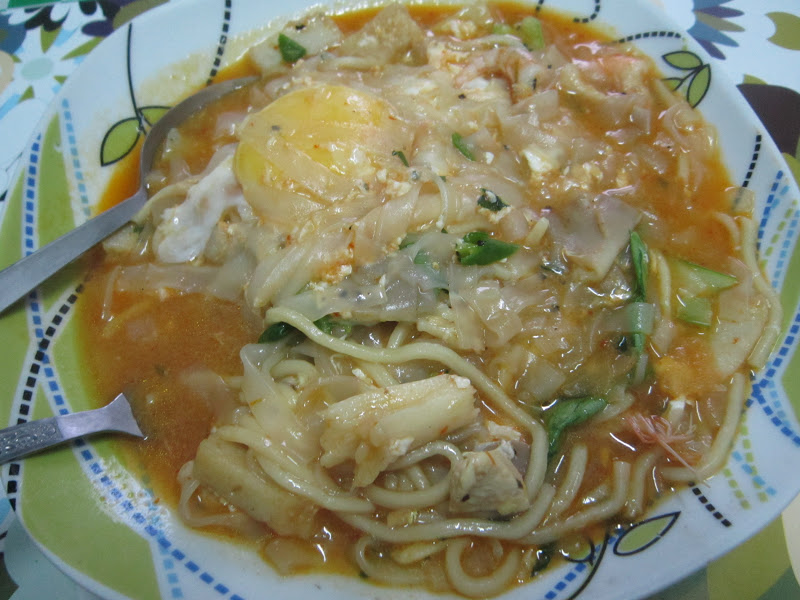
koay teow kuah/basah

prawn cocktail-prepared by trainee


cucur udang

Pinggan mangkuk nyawa ikan

Motif??
Heh,apa kes posting pasal pinggan mangkuk nyawa ikan nih?okeyy..diakui akhirnya aku obses jugak dengan pinggan mangkuk corelle,luminarc dan segala jenis pinggan mahal.Mahai la bagi aku yang berpendapatan kurang dari &*%^$ nih.Kalo orang anggap pinggan corell,luminarc sume tu murah,maka ko adalah orang kaya yang duit berkepuk-kepuk.
Sebelum ni hanya gila baju,kasut,handbag dan yang berkaitan diri.Makan tak kisah kot,guna daun pisang ke,daun kelapa ke semua boleh sebat.
Pinggan ayan ke,pinggan plastik,pinggan silver 40k pun aku takde hal.
Adakah roh makcik-mokcik telah menguasai jasad aku?hell yes.
Dua tiga menjak nih asik surf internet pasal pinggan mangkuk ayer hitam johor,pinggan mangkuk claytan,menang glassware,giacomo,portmeirion,royal albert dan tah pape lagi.OHH,sungguh aku suka tengok blog masakan yang sediakan hidangan dalam pinggan yang cantik molek.
Blog yang tunjuk pinggan biasa untuk kegunaan harian dan nampak genuine pun i like.Bila pinggannya satu set lauk,nasi dan ada lak air dicelah tu.
Tetapi,tapi,tapp,tapi kan aku nih langsung takde spesis pinggan yang lawa tu.Dan pinggan idaman aku pie-rat design Caracas yang bunga oren biru tu,kan pinggan tu dah lama hidup dan semua orang dah ada kecuali aku!
ni le pie rat Caracas design

Harga dalam katalog RM399 untuk 72 pieces..still rasa mahai kot(dasar kedekut haji bakhli).
Ok,tunggu aku dapat duit shoping RM5K baru pi beli set tu,***bab pinggan kedekut ko yer?bab baju segala boleh pulak?**
Okeh disebabkan anak sulung pun dah umur 9tahun,maka dengan tak malu aku akui yang pinggan kat rumah ada sikit saja.Guna pinggan caca merba,cilok dari kampung nun dan ada sapa yang tertinggal pinggan pot luck kat opis maka  akulah tukang hangkut bawa balik semua tu.Boleh??
Gambar kat bawah ni,hanya nilah pinggan yang ada kat rumah aku,nyawa ikan dowh.
pinggan dibeli masa bujang,2 pieces saja..byk jasa pinggan nih.

pinggan beli kat kedia Apek dan yang kanan tu beli di Tesco.satu 3.90 tak silap

yang ni ada beli kat IKEA,Jusco dan Tesco.Yang kecik tu beli kat Langkawi

Pinggan Melamine ni satu set lengkap.Beli kat Idaman Suri RM99.90 kot

Yang ni beli kat Tesco

Ni pun beli kat Tesco

Tesco mari
Itu sahaja pinggan yang aku ada dirumah.Kalo orang datang pun,gunalah pinggan yang macam rojak tu..dah tuan rumah muka kuali-tebal 20 inci dan takde nak ada etiquette table bagai.Tapi sekarang nak merasa jugak makan dalam pinggan mahaii ni.Nak hidang dalam pinggan mangkuk yang cantik sikit.Taktau pasai pa,nafsu adalah kengkonon nak bersopan santun,beretika,makan beradap dalam pinggan yang proper sikit (terpengaruh dengan siri Downton Abbey la tuh).Walau tak serupa datins-datins pun(mampus kot kalo nak ikut,pinggan je dah Royal Albert).
Kalau diikutkan,Jamie Oliver dalam Jamie's Great Britain tu,dia masak dan hidang je dalam pinggan campur-campur.Takde nak ikut set itu ini,dan pinggan dia jenis besar dan bercorak..dia letak steak dalam pinggan biru,pastu salad dalam oval red colour plate..Fun dan enjoy tengok dia guna pape je pinggan tapi tu lah,dah orang melayu la kot,nak ber-set-set,bunga mesti sama,pinggan dan mangkuk lauk kena sama,hatta casserol dish pun kena sama design. Baru nampak teratur dan beretika gitu.Macam mak-mak kita dulu.Pinggan bunga kangkung pun berset-set.Rindu kot nak makan dalam pinggan zaman dulu yang ada gambar windmill biru,pastu gambar ladang gandum warna koko.Nostalgia abis.seramik yang bila lama dia retak seribu.

Untuk post ni,Gigih kot aku hangkut pinggan ni dari kabinet dan susun untuk ambil gambar,sila hargai kerajinan aku ni (ada sape suruh?)
Jadi mulai sekarang,kumpul duit beli pinggan mahal sikit.Yang jadi idaman- luminarc -,ringan dan kaca pulak.
Ada sesapa tak nak main kutu utk beli pinggan luminarc tuh?nak join,nak join jugakk..